ORIGINAL POST: As the pre-teens draw to a close, let's look at the big issues dominating our collective consciousness and political discourse, issues that set the stage for the 2nd decade of the 21st Century and will determine the course of politics and the balance of power for years to come. 2009 began with a
monumental event in history as America saw the first black citizen assume the office of the presidency. Most Americans met this milestone with enormous hope, hope that far out-sized any one man's ability, even the most powerful man in the world. Hope has turned to frustration as President Obama has
struggled to unite political factions, quickly repair the economy or pass his landmark legislation, health care reform, to this point. The President has three years to recover; Democrats on the Hill have 10 months. Both have seen their
fortunes turn rather dramatically since sweeping wins in November of 2008.
Democrats' health care reform legislation remains bogged down in flying
sausage, though an end is potentially within site as Democrats desperately fight to
give Obama a landmark 1st-year achievement and pass a bill before Christmas. I've written
8 posts on health care with a good bit of background and plenty of my views on the issue. In sum, health care reform is of
critical importance to the
longterm sustainability and decency of the country we all love, BUT, unlike Americans, all health care reform is not created equal and is not by definition a positive step forward for the nation. Health care reform which fails to address the fundamental issues underlying our health care crisis of costs, quality & coverage and only adds more people, programs and taxpayer dollars to a quickly failing system will only exacerbate the problem and send us faster into the abyss. This type of legislation is indeed far worse than doing nothing. This is not to say that all Democrat ideas embodied in their bills fit this profile, but those which do are a grave concern. Indeed there is
room for hope that with some of the pilot projects in the Senate bill aimed at controlling costs, current legislation will be a
first step in a long process of getting the system under control. Forgive me for being
skeptical and believing Democrats have put the cart before the horse, expanding coverage with very little real effort to
first control exploding costs. With all of that said, let's see where we are with 17 days remaining in 2009.
This has made health care reform an excruciatingly
tenuous issue for
Democrats facing voters in only 10 months. The fact that they are sitting on a very different
political timeline than that of President Obama is causing much concern. These lawmakers are trying to figure out how a vote for health reform against the will of voters will be anything less than a death sentence for their political careers. Despite being the Senate Majority Leader, Harry Reid is in
The dean of Harvard Medical School penned a
must-read piece in the WSJ saying he gives the current bills a failing grade. In Dean Flier's words,
Our health-care system suffers from problems of cost, access and quality, and needs major reform. Tax policy drives employment-based insurance; this begets overinsurance and drives costs upward while creating inequities for the unemployed and self-employed. A regulatory morass limits innovation. And deep flaws in Medicare and Medicaid drive spending without optimizing care...
The various bills do deal with access by expanding Medicaid and mandating subsidized insurance at substantial cost—and thus addresses an important social goal. However, there are no provisions to substantively control the growth of costs or raise the quality of care. So the overall effort will fail to qualify as reform...
In discussions with dozens of health-care leaders and economists, I find near unanimity of opinion that, whatever its shape, the final legislation that will emerge from Congress will markedly accelerate national health-care spending rather than restrain it. Likewise, nearly all agree that the legislation would do little or nothing to improve quality or change health-care's dysfunctional delivery system...
In effect, while the legislation would enhance access to insurance, the trade-off would be an accelerated crisis of health-care costs and perpetuation of the current dysfunctional system—now with many more participants. This will make an eventual solution even more difficult. Ultimately, our capacity to innovate and develop new therapies would suffer most of all.
As Harry Reid frantically tries to round of the 60 votes needed to pass his health care bill, even
inserting $100 million dollars for Louisiana to get Landrieu's support, Joe Lieberman has become the biggest thorn in his side. Lieberman was one of the Democratic Senators (yes, I know he's technically an Independent following his 2006 loss in the Connecticut Democratic primary, but he caucuses with Democrats) to
demand scrapping the public option from Reid's bill. They
succeeded. Yesterday, Lieberman announced that
he would vote against the current bill, due to its expansion of Medicare (a "
compromise" many, including the Washington Post, believe is a
faster route to single-payer than the public option). Democrat Ben Nelson is
also against the compromise. With only 60 votes in his caucus, including Lieberman, and no Republicans likely to support the bill, Reid has zero room for error. Politico is
reporting that Obama has told Reid to give Lieberman
what he wants (a report the White House
denies), but Reid is holding on as the Senate is in
hurry up and wait mode for the CBO score of the latest compromise deal due in the next day or two. Meanwhile, in the House, Speaker Pelosi proclaims she is ready to do "
almost anything" to pass reform this year, setting up a potential showdown with her liberal wing who won't like the
watered down Senate version. Needless to say, these
disputes among Democrats pose
a grave threat to the self-imposed imperative of passing reform in 2009. Obama has
summoned the entire Senate Democratic caucus to the White House tomorrow for a meeting at this "make-or-break" moment for his health care overhaul.

In the end, as
David Brooks says, health care reform rests on a values question, our values individually and as a nation. Their is no clear right answer. It is a "brutal choice." No one in this debate is evil or selfish. With all of our similarities as fellow citizens we have different values. That is as it should be, and those values inform our stance on health care reform. As Brooks explains the dichotomy,
Reform would make us a more decent society, but also a less vibrant one. It would ease the anxiety of millions at the cost of future growth. It would heal a wound in the social fabric while piling another expensive and untouchable promise on top of the many such promises we’ve already made. America would be a less youthful, ragged and unforgiving nation, and a more middle-aged, civilized and sedate one...
We all have to decide what we want at this moment in history, vitality or security. We can debate this or that provision, but where we come down will depend on that moral preference. Don’t get stupefied by technical details. This debate is about values.

The President has tried his much discussed
soft, outstretched hand approach and against challenges,
reality and
limited success, has been
forced to move on to plan B. His decision process on Afghanistan was
long,
laborious and, to some, amounted to
dithering. It was clouded with leaks and
angry conflict between the White House and its own commanders. However, he did come to a firm decision and is moving forward. This President operates in "
analytic mode," dispassionate but serious and thoughtful.
In the next sentence after announcing the troop buildup, the President stated that troops would begin withdrawing in July of 2011, an obvious
concession to his base. His
advisors differ on how
firm that date is, but we know now this President is serious about and taking ownership of this war. I, therefore, have little concern that he will cut and run in July of 2011. He said nothing about how steep said draw-down would be.
In Oslo last week, President Obama accepted the Nobel Peace Prize. He used the opportunity to give a poignant
defense of war. This was no doubt jarring to his immediate audience but encouraging to conservatives at home who have worried this man is too naive and idealistic to lead in our world in which, as he stated, "
evil does exist." We
learn a lot about Obama the man through his speeches and some see the most recent as a
move to the center, a place of strength for an American president, and a
foreign policy shift as Obama bows to reality.
The stark reality is that terrorists dreaming of and plotting for the
destruction of America are
still not tired. We must fight on, steadfast in our commitment to freedom and security. To prevail we must have strong allies, a major
question mark in Afghanistan. I hope and pray Obama's decision was right. I hope he found the perfect balance between our national security, his most solemn duty, and the risk to our brave men and women, our most precious treasures. Obama
can win in Afghanistan, and if he remains firm in his resolve, conservatives and Americans at large will
stand behind him through thick and thin, all the way to victory.
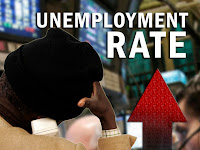
While there are
green shoots in the economy,
recovery is
scarcely touching jobs. The White House is
doing its best to convince voters that the
stimulus package has "
created or saved" thousands of jobs, but
watchdogs have
concluded those advertised numbers are
inflated,
inaccurate,
temporary or
just made up. Now, finally, the White House seems to be turning its
attention to the deficit, hopefully in earnest. The
wave of debt payments facing the government have the potential of crippling the economy, again. Voters rightly
see deficit reduction as the
top budget priority for Washington, well above health care. At the same time,
voters worry the government will
do too much for the economy, making the situation worse and hampering recovery. Only
23% of Americans trust the federal government to do what is right. 76%
prefer a free market economy, and Republicans are now
trusted more than Democrats to fix the economy. Mitt Romney, an almost certain presidential candidate in 2012, has outlined
his plan.
2009 LEFTOVERS
As you enjoy the many college football
bowl games this holiday season, think about whether or not the
government should intervene to
push for a playoff to replace the BCS system. Principled conservatives
believe this idea, by a Texas Republican, should "draw a 15-yard penalty for unnecessary roughness to the idea of limited government."
On Tiger, how utterly disappointing. Read Bill Simmons'
piece on the "zoo."
As far as views on Christmas across the country,
76% believe religious symbols should be allowed on public land,
72% prefer "Merry Christmas" to 'Happy Holidays" and
77% say they've been nice this year. I'm with the majorities!
Have a Merry Christmas & Happy New Year!!
Seeya in 2010! Midterm elections anyone?!
 I wish all of my readers a very Merry Christmas and Happy New Year 2010! May you enjoy a wonderful time with family and look forward to the many blessings a new year will bring.

 On November 3, 2009, the Republican Resurgence began. In two races billed as potential bellwethers of political fortunes in the 2010 midterms and watched for signals of the prevailing political winds, the GOP scored enormous victories in two states, Virginia and New Jersey, controlled by Democrats for the last eight years. Debate is fierce over how much, or little, the two local governor's races truly mean on a national scale, but, whatever the extent of their significance, they were bad news for the Democratic Party and the White House as Independents, who loved Democrats in recent years swung hard to the GOP.

 Election Day 2009 is finally here, and the few key races around the country are providing plenty of drama and excitement! While commentators warn against seeing results in Virginia, New Jersey or New York as bellwethers of what 2010 will hold for the two parties, sweeping conclusions will be drawn as many will see the races, 364 days after the historic election of Barack Obama, as a referendum of his first 9 months in office. With one of the races in the bag for the GOP, focus has turned to a nail-biter in New Jersey and an unusually dramatic Congressional contest in New York. The overall outlook is still foggy on Election Day as I and other political junkies stay glued to the latest polls for any hint of 11th hour momentum for the candidates.
 Oh New Jersey... In years past, New Jersey has given hope to Republicans only to dash it in the end. This scenario could play out again as incumbent Governor Jon Corzine has spent his fortune tearing down Chris Christie, his Republican challenger, in order to compensate for his own dismal approval in the state. This negative effort has been effective in mounting a major Corzine comeback; however, don't confuse this with improvement in Corzine's standing in voters' eyes. He has simply brought Cristie down to his low level while not budging himself.



 Posts
Posts