Pearce's New Initiative: Listen First Project

@ListenFirstProj Tweets

Showing posts with label Health Care. Show all posts

Wednesday, March 31, 2010

Health Care Bill Signed Plus Odds & Ends

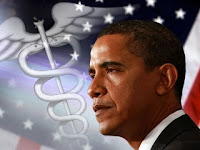
Democrat health care reform legislation, aka Obamacare, has been like a cat hanging on to its ninth life by one whisker, yet last week, on March 23, 2010, President Obama signed the landmark bill into law. As Joe Biden so eloquently put it, "this is a big * deal." That date, indeed, may go down in history along with August 14, 1935 (Social Security Act) and July 30, 1965 (Medicare Bill) as a pivotal moment in the evolution of America's political/social/economic culture.

However, evolution and "change" do not always move us in a positive direction as a nation. The historic nature of this milestone is unquestioned, but whether it will help cure the many ills of our health care system and mitigate our dire financial straits or simply push down the accelerator on an already unsustainable and perilous path will be the subject of rampant debate for the foreseeable future. A key distinction between this historic legislation and the two before is that those enjoyed significant bipartisan support, this bill had none.

First to the policy objections. I have written extensively over the past year addressing many of the pivotal issues and hidden burdens embodied in the 2,000 plus page legislation, so let's take a big picture view. In fairness, there are good and bad features of the legislation. Now that the bill is law, I can only hope it works to slow or reverse our current trajectory of higher cost and higher deficits, but I'm afraid such a hope finds little grounding in reality and rational expectation. For example, it is "politically inconceivable" that future Congresses will show more courage than this one mustered and actually implement the spending cuts and tax increases critical to the cost projections of the bill. I do fear that this bill, focused on more government to fix the problem and more spending to reduce the deficits, will only exacerbate the problem in the midst of already record deficits and out of control spending. When the "doc fix" is included (adding $371 billion) and deceptive double counting eliminated, the deficit actually increases by an additional $260 billion over ten years.

Even with half a trillion dollars in new taxes and another half trillion in Medicare cuts, this legislation does not bend the cost curve down, a cost curve that, if not reversed, will break a lot more than our health care system. Instead it drives up cost and over time could actually reduce access to health care as rationing will likely become our last best hope of staying off the financial precipice. The "disagreeable absence of a free lunch" strikes again. Despite the many budget gimmicks and dodges cleverly built into the package, which paint a deceptively rosy picture of overall cost, it will push our health care costs and deficits only higher. We cannot fail to drastically and boldly reduce health care costs that are crippling an already weak economy. This law fails. It it a "fiscal time bomb" waiting to explode as the revenue will never come and costs soar ever higher.

In light of this already grim outlook, we all, Democrats and Republicans, agree that our health care system is in desperate need of reform, but Republicans tend to believe, rightly in my view, that this brand of reform will only make our current problems exponentially worse and pile new ones on top. The Republican solution is, broadly, to increase consumer choice and competition as a means of immediately reducing costs while correcting a system of perverse incentives and opaque costs by emphasizing tax incentives and state innovations. Viewed through the prism of the philosophical dichotomy between the parties, Democrats favor a solution predicated on increased government involvement and control while Republicans favor greater individual liberties and a free-market approach to the problem.

Now, because nothing that happens in Washington is without wide-ranging and often complex political implications, to the political fallout of Democrat health care reform. Yes, Democrats achieved a goal of paramount importance to the party in pushing through Obama's top legislative priority, but could it do more harm than good for majority and haunt them in November and beyond?

From raucous town halls during the summer months to demonstrations on the Capitol steps in the final hours of the sausage making, Americans of all political stripes have passionately and repeatedly expressed their displeasure with the Democrats' proposals. The will of the American people, expressed in polls from sea to shining sea, notwithstanding, Democrats tirelessly pushed their liberal agenda for health care through the halls of Congress. This seemingly blind and ideological pursuit could cost them dearly at the ballot box and prove to be a "colossal miscalculation." The year-long, tumultuous debate has inflicted significant damage on Obama and the Democratic Party.

As I recently outlined, 2010 is shaping up as the year of the Republican elephant. It's hard to see how the passage of Obamacare, which voters did not want, ameliorates what is looking like an electoral disaster for Democrats in November. Many analysts believe they have now dug the hole deeper, pointing to the voter backlash in 1994 following the failure of Hillarycare. The twenty Democrats hailing from John McCain won districts who voted in favor of the bill have earned bright red targets on their backs, with Sarah Palin and other national Republicans pouncing.

While we're all tired of legislative process stories, it's worth acknowledging voters' distaste for the kind of arm twisting, backroom dealing, logrolling, rules changing and raw politicking they witnessed from Democrats in a no-holds-barred effort to see their will done on a straight party-line vote, not to mention the broken promises. The use of reconciliation to push the legislation through the Senate on a simple majority vote after Democrats lost their 60th seat to Scott Brown in Massachusetts was only the tip of the iceberg.

Following passage, the public is very divided but hardly undecided about Obamacare, less than 10% without an opinion. In the immediate aftermath, Republicans are predictably unhappy, Democrats are happy and Independents are divided but favor Republicans on the ballot. The economy will almost certainly remain voters preeminent concern in November, but both sides will attempt to use health care to fit their own narrative. An improved perception of health care among the electorate is only one leg of the stool Democrats must build between now and November to avoid an unmitigated walloping that could cost them control of one or both houses of Congress. For starters, they need Obama's popularity and the sluggish economy to make marked improvements.

The President has certainly gotten a lot of positive press following the signing, but how long will the afterglow last and will any real bounce show up in the polls? Some polls indicate a slight post-signing bounce while others indicate no real change since the battle lines were drawn last summer. If anything, the Democratic base has ticked up a notch in enthusiasm, something they have been sorely lacking since electing Obama in 2008. Whether any positive bounce is lasting on transient will depend on "salesmanship and implementation" by Obama, his fellow Democrats and the administration. We'll have to wait until November to see how this saga ultimately plays in the minds of the only ones who matter, voters.

PG Poll: Do you support the passage of Democrat health care reform? Vote on the left side of the page.

Texting and driving has been in the news a lot over the last several months, and as someone who has been guilty from time to time, I find it interesting. Unless you're the rare "supertasker," the practice does impair your driving. From distracted driving forums to Senate legislation to an executive order from Obama, lawmakers are cracking down. The practice has even been dubbed a "menace to society." Society agrees. Ninety-one percent favor a ban. In my home state of North Carolina, DWT (I want a patent on that acronym) is now illegal and punishable by a $100 fine. Over a dozen states have passed such laws. Lest we paint texting with too broad a negative brush, remember that soft-hearted texters sent over $20 million to Haiti in one week. Political candidates are now wondering if they can leverage the technology to their benefit. Regardless of why you're punching away at the phone keyboard, make sure you steer clear, ha, of the banned words of 2010. Oh, and watch out for cell phone induced brain cancer.

While we're on technology, see the next generation of must have electronics. To make these gadgets run faster, the FCC is launching a "visionary" plan to expand broadband access across the country, something Google and everyday users have anxiously awaited. Speaking of Google, the behemoth of all things internet played a major role in Scott Brown's stunning victory in Massachusetts. Meanwhile, the White House has been all aTwitter of late, even Obama tweeted, and the GOP has launched a hot new BlackBerry app for congressmen. Check out these two fascinating videos on the power of social media. Finally, after years of rumor, it looks like the iPhone really is branching out from AT&T.

Here's an assortment of particularly interesting pieces:
Turns our jerks are bad decision makers. Tall people are happier than short people. The 50 best YouTube videos of all time or the best and worst in four minutes. Nobody trusts congressmen or car salesmen but give nurses and doctors hight marks, would hope you trust your doctor. Scientific evidence points to life after death as 59% of Americans are "absolutely certain" there is a God. Basic arithmetic illustrates why the enemy of my enemy is my friend. The Toyota crisis has demonstrated the "price of modernity." Your race may determine your nighttime and sleep habits. The President has a Facebook feed, sorta. In honor of a midterm election year, brush up on your political lexicon.

I'll end with what we all know is the most important thing gripping our nation this month, March Madness! Even as his health care reform was in its final hours and he was sharpening his 22 pens for the signing, the President was "examining the rubble of his bracket." He filled out a tourney bracket for the second year, but isn't seeing the success he enjoyed last year. With Duke in the Final Four, I (on the right in this ESPN pic) and my fellow Cameron Crazies are boiling over with excitement and anticipation, excitement that brain researchers at Duke and UNC have recently studied. Lest you hate, these Dukies "should be cheered" and are "worth rooting for." Heck, even UNC coach Roy Williams, sweating through an NIT Final Four game as I type, is picking Duke! Senate candidates in Kentucky are actually attacking each other on their Duke ties, love it! Turns out sports viewers generally and college basketball fans in particular are largely Republican, and most of the Final Four teams have GOP fan bases. If you don't quite get what the big * deal is (thanks Biden), see this guide on bluffing your way through the Dance... or follow the hilarious name bracket instead. If you do get it, Let's Go Duke!!

Monday, December 14, 2009

2009 Roundup: Health Care, Afghanistan & The Economy

UPDATE 12/24/2009: The United States Senate has passed its version of the Democrats' health care bill on a 60-39, strict party-line vote which took place Christmas Eve morning. Democratic leaders in the House and Senate will now work to merge the Senate bill with the much more liberal House bill. Senators Lieberman (I-CT) and Nelson (D-NE) have vowed to veto the final bill if it moves left of the version they supported this morning. With their more moderate interest on one side and disenchanted House liberals on the other, the Conferencing of the two bills promises more drama, deal-making and a still uncertain fate for President Obama's top legislative priority.

ORIGINAL POST: As the pre-teens draw to a close, let's look at the big issues dominating our collective consciousness and political discourse, issues that set the stage for the 2nd decade of the 21st Century and will determine the course of politics and the balance of power for years to come. 2009 began with a monumental event in history as America saw the first black citizen assume the office of the presidency. Most Americans met this milestone with enormous hope, hope that far out-sized any one man's ability, even the most powerful man in the world. Hope has turned to frustration as President Obama has struggled to unite political factions, quickly repair the economy or pass his landmark legislation, health care reform, to this point. The President has three years to recover; Democrats on the Hill have 10 months. Both have seen their fortunes turn rather dramatically since sweeping wins in November of 2008.

Democrats' health care reform legislation remains bogged down in flying sausage, though an end is potentially within site as Democrats desperately fight to give Obama a landmark 1st-year achievement and pass a bill before Christmas. I've written 8 posts on health care with a good bit of background and plenty of my views on the issue. In sum, health care reform is of critical importance to the longterm sustainability and decency of the country we all love, BUT, unlike Americans, all health care reform is not created equal and is not by definition a positive step forward for the nation. Health care reform which fails to address the fundamental issues underlying our health care crisis of costs, quality & coverage and only adds more people, programs and taxpayer dollars to a quickly failing system will only exacerbate the problem and send us faster into the abyss. This type of legislation is indeed far worse than doing nothing. This is not to say that all Democrat ideas embodied in their bills fit this profile, but those which do are a grave concern. Indeed there is room for hope that with some of the pilot projects in the Senate bill aimed at controlling costs, current legislation will be a first step in a long process of getting the system under control. Forgive me for being skeptical and believing Democrats have put the cart before the horse, expanding coverage with very little real effort to first control exploding costs. With all of that said, let's see where we are with 17 days remaining in 2009.

For months now, public opinion has been trending against Democrats' health care reform, with no momentum following passage in the House. The latest CNN poll shows 61% in opposition to the bill. Also, a majority disapprove of the President's handling of the issue. Americans' believe health care coverage is not the government's responsibility and that their costs will increase. They think it is the wrong time for health care reform in light of the economy, unemployment and the growing deficit, which most believe these bills will increase. Perhaps surprisingly, much opposition is from the left.

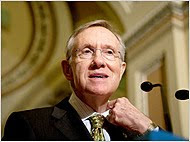
This has made health care reform an excruciatingly tenuous issue for Democrats facing voters in only 10 months. The fact that they are sitting on a very different political timeline than that of President Obama is causing much concern. These lawmakers are trying to figure out how a vote for health reform against the will of voters will be anything less than a death sentence for their political careers. Despite being the Senate Majority Leader, Harry Reid is in
more political trouble over health care than most members of his caucus as his state stands firmly against his bill. One idea is to push benefits up to 2010 in order to show tangible, positive results before voters head to the polls. Stu Rothenberg wonders Democrats are trying to walk off a cliff as those most likely to vote in 2010 are against the Democrats' reform.

The bills passed by the House and the one currently at play in the Senate are being decried by smart observers and activists on the right and left. The left complains that the bills do not contain a "robust" public option, aka quick trojan horse to single payer care, that they still leave millions uninsured and that the House bill restricts government subsidies of abortions. The right is incensed by the expansion of government control over patients' decisions and treatments, the fact that the bills bend the cost curve up instead of down as confirmed by the director of the Congressional Budget Office and the CMMS, the increase in individual insurance premiums, that they fail to block illegal immigrants from receiving coverage, that millions will lose their coverage, that they include potentially unconstitutional individual mandates, and that the Senate bill slashes Medicare, an arguably hypocritical stance. Some Democrats and liberals are also raising alarms over the costs of the bills and demanding the ban on taxpayer funds for abortion. These bills indeed send several of the President's promises down the river.

The dean of Harvard Medical School penned a must-read piece in the WSJ saying he gives the current bills a failing grade. In Dean Flier's words,

Our health-care system suffers from problems of cost, access and quality, and needs major reform. Tax policy drives employment-based insurance; this begets overinsurance and drives costs upward while creating inequities for the unemployed and self-employed. A regulatory morass limits innovation. And deep flaws in Medicare and Medicaid drive spending without optimizing care...

The various bills do deal with access by expanding Medicaid and mandating subsidized insurance at substantial cost—and thus addresses an important social goal. However, there are no provisions to substantively control the growth of costs or raise the quality of care. So the overall effort will fail to qualify as reform...

In discussions with dozens of health-care leaders and economists, I find near unanimity of opinion that, whatever its shape, the final legislation that will emerge from Congress will markedly accelerate national health-care spending rather than restrain it. Likewise, nearly all agree that the legislation would do little or nothing to improve quality or change health-care's dysfunctional delivery system...

In effect, while the legislation would enhance access to insurance, the trade-off would be an accelerated crisis of health-care costs and perpetuation of the current dysfunctional system—now with many more participants. This will make an eventual solution even more difficult. Ultimately, our capacity to innovate and develop new therapies would suffer most of all.

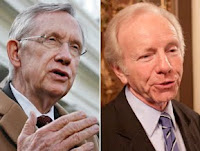
As Harry Reid frantically tries to round of the 60 votes needed to pass his health care bill, even inserting $100 million dollars for Louisiana to get Landrieu's support, Joe Lieberman has become the biggest thorn in his side. Lieberman was one of the Democratic Senators (yes, I know he's technically an Independent following his 2006 loss in the Connecticut Democratic primary, but he caucuses with Democrats) to demand scrapping the public option from Reid's bill. They succeeded. Yesterday, Lieberman announced that he would vote against the current bill, due to its expansion of Medicare (a "compromise" many, including the Washington Post, believe is a faster route to single-payer than the public option). Democrat Ben Nelson is also against the compromise. With only 60 votes in his caucus, including Lieberman, and no Republicans likely to support the bill, Reid has zero room for error. Politico is reporting that Obama has told Reid to give Lieberman what he wants (a report the White House denies), but Reid is holding on as the Senate is in hurry up and wait mode for the CBO score of the latest compromise deal due in the next day or two. Meanwhile, in the House, Speaker Pelosi proclaims she is ready to do "almost anything" to pass reform this year, setting up a potential showdown with her liberal wing who won't like the watered down Senate version. Needless to say, these disputes among Democrats pose a grave threat to the self-imposed imperative of passing reform in 2009. Obama has summoned the entire Senate Democratic caucus to the White House tomorrow for a meeting at this "make-or-break" moment for his health care overhaul.

In the end, as David Brooks says, health care reform rests on a values question, our values individually and as a nation. Their is no clear right answer. It is a "brutal choice." No one in this debate is evil or selfish. With all of our similarities as fellow citizens we have different values. That is as it should be, and those values inform our stance on health care reform. As Brooks explains the dichotomy,

Reform would make us a more decent society, but also a less vibrant one. It would ease the anxiety of millions at the cost of future growth. It would heal a wound in the social fabric while piling another expensive and untouchable promise on top of the many such promises we’ve already made. America would be a less youthful, ragged and unforgiving nation, and a more middle-aged, civilized and sedate one...

We all have to decide what we want at this moment in history, vitality or security. We can debate this or that provision, but where we come down will depend on that moral preference. Don’t get stupefied by technical details. This debate is about values.


The other major story as we conclude 2009 is President Obama's bold decision to send 30,000 more American troops into combat in Afghanistan. Obama rightly sees Afghanistan as imperative for our security. As he put it in March, “This will not be quick, nor easy. But we must never forget: This is not a war of choice. This is a war of necessity. ... This is fundamental to the defense of our people.” Everything is easier said than done. At West Point, the President turned those strong words into strong action, much to the relief and pleasure of conservatives, who feared weakness, and to the dismay of many liberals. Indeed, on Afghanistan, the President is dealing with reverse coalitions. The political peril in the President's decision makes it all the more admirable.

The President has tried his much discussed soft, outstretched hand approach and against challenges, reality and limited success, has been forced to move on to plan B. His decision process on Afghanistan was long, laborious and, to some, amounted to dithering. It was clouded with leaks and angry conflict between the White House and its own commanders. However, he did come to a firm decision and is moving forward. This President operates in "analytic mode," dispassionate but serious and thoughtful.

In the next sentence after announcing the troop buildup, the President stated that troops would begin withdrawing in July of 2011, an obvious concession to his base. His advisors differ on how firm that date is, but we know now this President is serious about and taking ownership of this war. I, therefore, have little concern that he will cut and run in July of 2011. He said nothing about how steep said draw-down would be.

In Oslo last week, President Obama accepted the Nobel Peace Prize. He used the opportunity to give a poignant defense of war. This was no doubt jarring to his immediate audience but encouraging to conservatives at home who have worried this man is too naive and idealistic to lead in our world in which, as he stated, "evil does exist." We learn a lot about Obama the man through his speeches and some see the most recent as a move to the center, a place of strength for an American president, and a foreign policy shift as Obama bows to reality.

The stark reality is that terrorists dreaming of and plotting for the destruction of America are still not tired. We must fight on, steadfast in our commitment to freedom and security. To prevail we must have strong allies, a major question mark in Afghanistan. I hope and pray Obama's decision was right. I hope he found the perfect balance between our national security, his most solemn duty, and the risk to our brave men and women, our most precious treasures. Obama can win in Afghanistan, and if he remains firm in his resolve, conservatives and Americans at large will stand behind him through thick and thin, all the way to victory.

The economy, the one issue in politics that voters think about every single day, every time they pull out their wallets and every time they think about the future. The economy is the top issue for voters now as it has been for most of 2009. With unemployment rising to 10.2 percent in October and the '09 deficit topping $1.4 trillion, Americans are understandably worried and skiddish. The U-6 statistic tells us that a more accurate look at total economic dislocation is 17%, which includes underemployment. For Democrats, that means it's time to put jobs first or risk enraging the struggling electorate. With every passing day, the "rubble" of the economy is increasingly at Obama's feet, and Americans expect him to fix it. Interestingly, Democrats are more likely to be unemployed than Republicans. Blacks are worst hit, with 35 percent of the young unemployed.

While there are green shoots in the economy, recovery is scarcely touching jobs. The White House is doing its best to convince voters that the stimulus package has "created or saved" thousands of jobs, but watchdogs have concluded those advertised numbers are inflated, inaccurate, temporary or just made up. Now, finally, the White House seems to be turning its attention to the deficit, hopefully in earnest. The wave of debt payments facing the government have the potential of crippling the economy, again. Voters rightly see deficit reduction as the top budget priority for Washington, well above health care. At the same time, voters worry the government will do too much for the economy, making the situation worse and hampering recovery. Only 23% of Americans trust the federal government to do what is right. 76% prefer a free market economy, and Republicans are now trusted more than Democrats to fix the economy. Mitt Romney, an almost certain presidential candidate in 2012, has outlined his plan.

Americans need economic recovery. We need a renewal of "moral materialism" and the manic energy which has taken America from the banks of Plymoth to the pinnacle of prosperity, power and influence. We've survived the shocks of a year ago, but people are truly struggling and having a hard time seeing the light at the end of the tunnel. We must unleash market power and individual innovation to ensure a bottom up recovery for America, quick, strong and enduring.

2009 LEFTOVERS


As you enjoy the many college football bowl games this holiday season, think about whether or not the government should intervene to push for a playoff to replace the BCS system. Principled conservatives believe this idea, by a Texas Republican, should "draw a 15-yard penalty for unnecessary roughness to the idea of limited government."

On Tiger, how utterly disappointing. Read Bill Simmons' piece on the "zoo."

As far as views on Christmas across the country, 76% believe religious symbols should be allowed on public land, 72% prefer "Merry Christmas" to 'Happy Holidays" and 77% say they've been nice this year. I'm with the majorities!

As we move into decade 2 of the 21st century, we're witnessing the end of the email era as Twitter is changing the way we live.

Consider giving cash or gift cards this year. It's better for the economy.

Finally, I'm very proud of Raleigh-Durham, NC for being ranked the smartest city in America! Let's Go Duke! And Carolina is pretty smart too.

Have a Merry Christmas & Happy New Year!!
Seeya in 2010! Midterm elections anyone?!

Wednesday, October 21, 2009

Health Care Progress & Approaching Elections

Despite major headwinds, the Democrats' Health Care/Insurance reform bill has made progress on Capitol Hill in the last couple of weeks as Max Baucus' Senate Finance Committee passed its version of the legislation out of committee. It is now one of five versions or reform circulating on the Hill, however, it is by far the most important and most likely to be the vehicle for ObamaCare. Baucus' bill, actually only "conceptual language" when released is the product of months of bipartisan negotiations between 3 Democrats and a dwindling group of moderate Republicans. In the end, Democrats were left with only one Republican aye vote in committee, Maine's Olympia Snowe, a very moderate and independent, thus exceedingly powerful, Senator.

The bill drew fire from both sides of the aisle. Republicans, despite some limited moderation, believe the bill still takes too much power from patients, giving it to government, and costs too much for individuals, families and the country, over $2 trillion by some analysis, sending soaring deficits higher. Liberals, meanwhile, don't believe the bill goes far enough in the direction of government run health care. Both sides regret that the bill falls far short of covering all Americans. There are many problems with this piece of "conceptual language," but the fact that it has been panned by both sides could be a signal that it is approaching some middle ground on the issue, often a positive position from which to launch major reform. I do not support the bill in its current form, but it is a substantive improvement from the more government, more spending, more taxes, more debt approach favored by Pelosi. Unfortunately, given that relative to the other 4 bills this is the moderate alternative, the final bill voted on in the Senate and the product out of the Conference Committee which will merge that bill with a more liberal House bill, will almost certainly be a greater afront to individual liberty and fiscal responsibility.

Public support of health care reform has dropped slightly with the committee passage of the bill. Only 42% of Americans support reform while 54% oppose according to Rasmussen. Even more, 56%, believe health care costs will go up if ObamaCare passes Congress, a rejection of one of Obama's primary justifications for reform. More broadly, Americans by a factor of 2 to 1 believe Government is doing too much, too fast. As for the Baucus Bill specifically, even Democratic Senators recognize it as a "big, big tax" on the middle class, a breach of President Obama's explicit campaign promise to not raise taxes on that group. All bills include an individual mandate, assailed by Republicans and opposed by Americans, which will result in young adults paying a big share of the cost. While the public option was left out of the Baucus bill due to broad opposition, some fear a trap by which it will make it's way into the legislation. Polling has varied of late on the Public Option with one poll showing a sample of doctors favoring it if alongside private care and a new WaPo poll showing support increasing.

The Baucus bill moves closer to fulfilling Obama's "Dime Standard" on reform, but it is still enormously costly, especially in the "out years" of the second decade. Democrats got creative in concealing the real costs from Americans and the CBO by staggering revenue and costs by several years. Many also believe the reform will be bad news for workers as higher costs on employers will be passed to employees. In addition, the bill will cut Medicare benefits for seniors according to the CBO, contrary to what Obama promises. There are other problematic elements hiding in the bill as well. Americans' concerns on these and other aspects of the bill are especially poignant to red state Democrats who are weary of spurning their constituents in supporting ObamaCare. Two-thirds of Americans say that how their member votes on health care will be a major factor in their vote next year.

Let's not forget one of several grand fallacy's in this push for reform. We are going to care for more people with less doctors. No matter how many ways you twist it, this will necessarily and absolutely lead to rationing of health care. The answer is not to turn a blind eye to the uninsured. It is to provide additional incentives and remove the disincentives present in ObamaCare for our best and brightest to join the medical profession in greater numbers. Getting serious about tort reform, despite trial lawyers being one of Democrats' most loyal voting and donor blocks, would be a good start. The shortage of primary care doctors in this country, approaching a crisis, will be a major obstacle to Obama's ideals and would worsen the impact of his reform. Worse, 45% of doctors say they would consider quitting if Congress passes the current health care overhaul!

In the President's lofty rhetoric and grand, counter-intuitive and even nonsensical proclaimations about health care reform, he "implies, misdirects and misleads." To say he lies is too strong, but he is less than honest, forthright and transparent with the American people in his frantic push for reform. Why? He expects, and has seen, that the more voters understand the necessary implications of ObamaCare, the more they fear and oppose it. Only 43% approve of how the President has handled the debate, with a majority disapproving. Perhaps for this reason, he is taking a "hiatus" on the issue so that he can "come back stronger." If only Obama and his Democratic allies would find strength by laying out honestly the enormous challenges facing the system and truly seek a bipartisan solution, many Republicans and Americans would seize the opportunity to collaborate on and get behind reform that is fundamental, critical and historic. Is there still a chance for this kind of progress on health care? Yes, if all involved, think more about Americans' future and less about their own political ambition.

Two major elections which could prove to be bellwethers of electoral successes to come, particularly for Republicans, are turning into the final stretch. The races for Virginia and New Jersey governor have only 12 days remaining and all sides have ratcheted up the intensity. For the GOP the races have been on divergent tracks of late. In Virginia, Bob McDonnell, the GOP nominee, is closing strong and has seen his lead in the polls more than double in the last month with the latest showing him up 19 points over Democrat Creigh Deeds. Meanwhile, in New Jersey the Republican nominee, Chris Christie, has seen his standing slide, not because incumbent Governor Jon Corzine has gained favorability, New Jersey voters still dislike him immensely, but because an Independent, Chris Daggett is gaining a larger share of the anti-Corzine vote. As a result, the race is in a dead heat in its final days. With Corzine hitting a ceiling around 40 percent despite his many fat jokes, the identity of New Jersey's next governor hinges on how many voters pull the lever for Daggett. Traditionally, Independent candidates under-perform their poll standing on election day as voters decide against throwing away their vote.

Bob McDonnell has expanded his lead in Virginia as voters have grown weary of Deeds' incessant negative attacks and his inability to articulate clear plans for confronting the Commonwealth's many challenges. The slide has led Deeds to point blame at "what's going on in Washington," not a good idea when it's the Obama voters you most need to give you a fighting chance. Those voters are unenthusiastic about Deeds to say the least while Bob is reaping the benefits of a "ginned-up GOP" who will likely turn out in force, tipping the expected turnout on November 3rd decidedly in his favor. Stu Rothenberg has responded to the movement in the polls by moving the race from toss-up to lean takeover for Republicans. Although Obama will be campaigning for Deeds this coming Tuesday, the White House has stepped back from the race somewhat so as to not tie itself to the sinking ship that is the Deeds campaign. Down ballot Democratic candidates are pursuing the same strategy of deserting Deeds as the campaign comes to a close. Even more worrisome for Democrats, polling on the race may point to trouble around the country in next year's midterms, including a precipitous drop in black voter turnout from the high of 2008.

Is is of course not over until the fat lady sings and the last votes are counted, but a Deeds Comeback, which Democrats still try to envision, saying it would be the "greatest comeback in the history of American politics," looks less and less likely with every passing day, especially with McDonnell enjoying a 2:1 cash advantage in the home stretch. For Deeds to snatch the Governor's mansion from McDonnell's grasp, he will need both the "sleeping giants" of the Obama surge to rise up and a major game changer to erase McDonnell's substantial lead among Independents before it is too late. Unfortunately for Deeds and Democrats, it probably already is.

Tuesday, September 15, 2009

Obama's Uphill Battle on Health Care

President Obama welcomed members of Congress back from the most tumultuous August recess many of them had ever faced with an address to a joint session in the House chamber in which he hoped to regain control of a debate that got away from him in August as public opinion soured drastically on his health care reform proposals, dragging the President's own approval down. Analysts called his speech a make or break moment for his signature legislative initiative as everyone hoped he would be more definitive and specific about what exactly he supports in health care reform and what he doesn't. The President offered a few more specifics, but left some of the most contentious questions, such as his bottom line on the public option, unanswered. Fact checkers, including the AP, found "a variety of oversimplifications and omissions" as well as "spurious" claims.

After a post-speech bounce in public support for Obamacare, opinions on the reform proposals have fallen back to August levels as voters still aren't convinced the changes will help them. This is bad news for Obama and his allies and indicates that even after employing his inspirational rhetoric and unquestioned speech making talent, the President faces a major uphill battle, with 23 Democrats vowing to vote no, to see anything close to his original ideas for reform make it to his desk. Worse for the President, 54% of voters say the more they hear about his plan, the less they like it. With public opinion mirroring that of Clinton's failed effort in 1994, perhaps it would be wise for Obama to step back and start over.

It has indeed been a rocky road for the President as he has "turned mortal" right before our eyes and even his strongest supporters are beginning to call he and the Democratic Party out. Camille Paglia, called one of the left's sharpest minds and someone who is as liberal as it gets, has taken Obama to task and even called for Pelosi, presiding over the most unpopular Congress in decades, to step aside. She writes about "Obama's healthcare horror," the administration's "grotesque mishandling of healthcare reform" and the President's "vague and slippery promises" which she exposes as nonsensical and false; others have called them fantasies. "It isn't conservative rumors or lies that are stopping healthcare legislation; it's the justifiable alarm of the electorate." She wonders "who is naive enough to believe that Obama's plan would be deficit-neutral? Or that major cuts could be achieved without drastic rationing?" Paglia concludes that "after a summer of grisly hemorrhaging, too much damage has been done" as "liberals have drifted into a strange servility toward big government." Read her pieces, brilliantly written, to see that she has no tolerance for Republicans either, but as a prominent liberal, I believe her reasoned and objective criticisms of Obama and his health care proposals carry a particular weight and credibility.

Nothing more needs to be said in this space about the public option, which as I've laid out before is by design intended to be a gateway to a single payer system of health care which voters firmly reject as contrary to American liberty and capitalism. Given that, to Obama's surprise, the public option has become a flash point in the debate and deeply unpopular and is thus likely dead, other watered down proposals, such as "triggers" to activate the public option at some later date, have been put forward to accomplish some of its same ends.

One idea is to use co-ops to provide competition to private insurers and help cover those who are currently unable to get health insurance. Co-0ps have a rich tradition in the US, but they can come in two very different varieties which would make all the difference as it concerns the health care debate. A co-op run by the government and funded by the government which offers health plans chosen by the government would simply be one step back from the public option- a trojan horse for the trojan horse for single payer. On the other hand, a co-op run by its members, funded by its members and controlled by its members could be a successful mechanism to reach some of our mutually agreed upon goals in the health care system. As you might expect, the Democrats warming to the co-op idea have in mind the former variety. Also troubling are proposals for individual and employer mandates to purchase health care, a specific, highly regulated service, or face stiff penalties, something that the CBO says would be unprecedented in this country.

One of the best opinion pieces written on health care recently caused one of the most absurd reactions from the left I have ever seen. John Mackey, CEO of Whole Foods, a favorite of progressives, wrote a piece in the WSJ in which he argues against a government takeover of the health care system and deficits that will bankrupt our country by presenting eight quality reform ideas geared towards "less government control and more individual empowerment."

From the incredible reaction by his liberal patrons, you would have thought he was promoting terrorism; he was indeed called evil and worse. They absolutely vilified a CEO who, in 2007, gave up his salary for charity. His exercising of his right to free speech, typically sacred to liberals, presenting well-reasoned alternative ideas to the liberal solution incited a massive boycott and caused his company's brand perception to drop. It is truly pathetic and a sad commentary on the state of our political discourse that civility, tolerance and respect have given way to vitriol over policy disagreements. It it not only those on the left who are guilty, but this episode was telling. Americans supportive of his ideas and disgusted by the reaction responded with "buycotts" around the country.

One of the points Mackey made is fundamental to the health care policy issue. He observes,

Many promoters of health-care reform believe that people have an intrinsic ethical right to health care. Health care is a service that we all need, but just like food and shelter it is best provided through voluntary and mutually beneficial market exchanges. A careful reading of both the Declaration of Independence and the Constitution will not reveal any intrinsic right to health care, food or shelter. That's because there isn't any. This "right" has never existed in America.

A Duke professor, after analyzing exactly what is in the House's reform bill, recently wrote on the same issue, pointing out that "There was no right to such care before doctors, hospitals, and pharmaceutical companies produced it." While Obama has favored addressing the issue as one of choice and competition rather than as the moral imperative many liberals see for the government to provide health care to all, it is an interesting point to consider. There is no fundamental right to healthcare. We, as a compassionate nation, should see to it that policies are in place to allow all of our fellow citizens to reap the benefits of one of the very best health care systems in the world. There are strong proposals for doing just that without putting the government in between patients and doctors, artificially rationing new procedures and technologies and bankrupting the country with new entitlements. Government exists to preserve our natural, inalienable rights; it does not exist to control our access to critical and personal services.

Check out the comment Danny Mammo of Duke left on my last post critical of some of my evidence. I responded, defending the validity of the Lewin study and shedding light on the discrepancy with the CBO. We dove deeper into the specifics of the bill, including some of the more inflammatory charges made by conservatives: death panels, abortion funding and health care for illegals. Please share your thoughts as well!

Note: Thank you so much for a great first year for the PG Blog with more than 3,500 views and over 200 Facebook fans!!